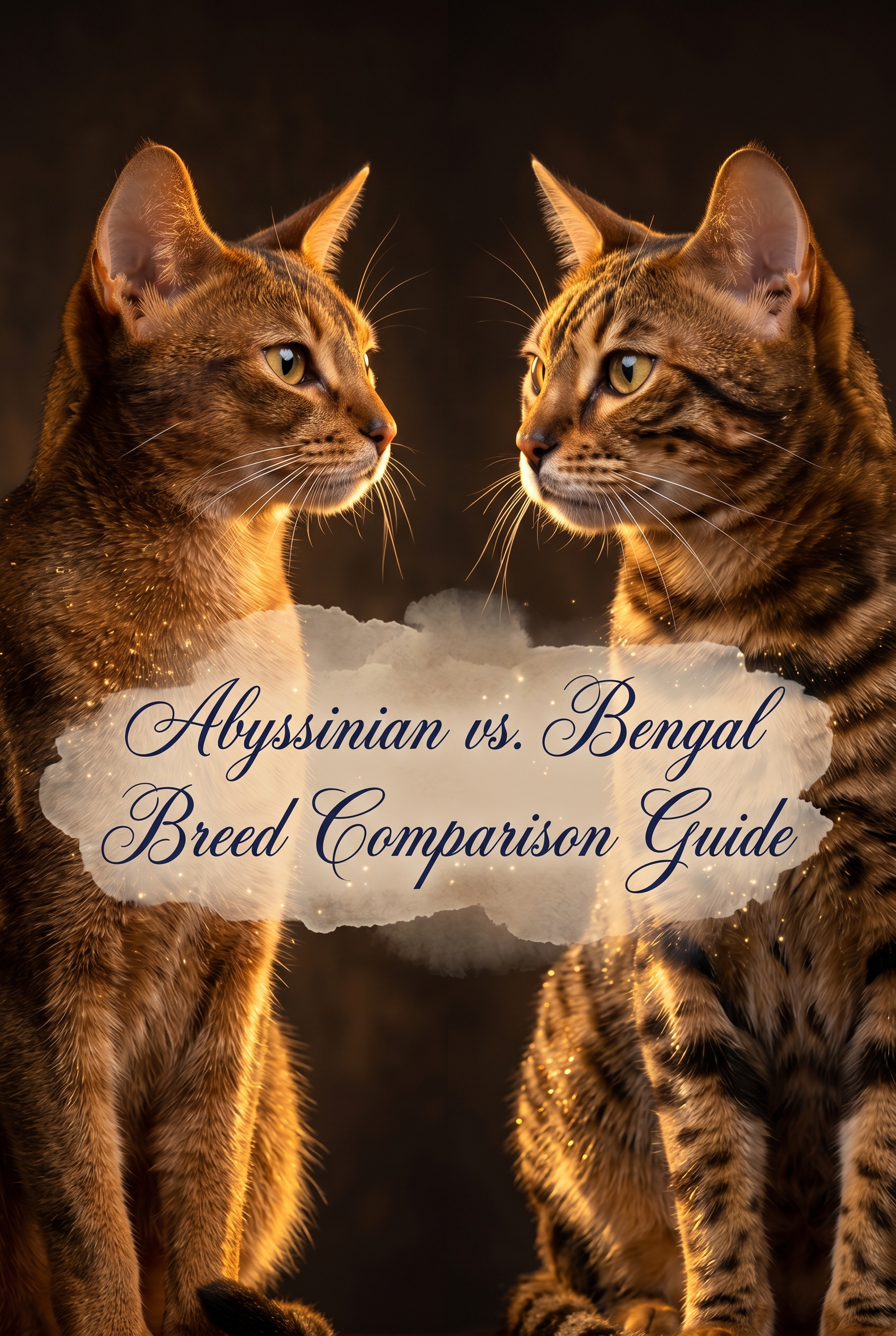
Are you torn between the elegant Abyssinian and the exotic Bengal? While both breeds boast wild looks and high intelligence, they offer very different living experiences. This Abyssinian vs. Bengal comparison breaks down energy levels, health risks, and unique traits to help you find your perfect feline match.
Choosing between an Abyssinian vs. Bengal can be a tough decision for any fan of exotic-looking felines. Both are celebrated for their wild-inspired aesthetics and dynamic personalities, making them ideal for experienced owners seeking an interactive, intelligent companion. This comprehensive guide delves into their histories, temperaments, and unique care requirements to help you determine which energetic breed aligns with your lifestyle.
Ancient Origins vs. Modern Hybrids
Abyssinian History: An Ancient Lineage
The Abyssinian is one of the oldest known cat breeds, its origins wrapped in legend. While once thought to be the sacred cats of ancient Egypt, modern genetic studies point to Southeast Asian or coastal Indian Ocean roots. They debuted at the Crystal Palace cat show in 1871 and have maintained global popularity ever since.
Bengal History: A Modern Hybrid Creation
Unlike the natural Abyssinian, the Bengal is a deliberately engineered hybrid. Developed in the 1960s by crossing domestic cats with the wild Asian leopard cat, the goal was to create a pet with a fierce leopard look but a predictable domestic temperament. Today, only "Stud Book Tradition" (SBT) Bengals are considered fully domestic pets.
Physical Characteristics: Elegance vs. Power
| Feature | Abyssinian | Bengal |
|---|---|---|
| Weight | 6–12 lbs | 8–15 lbs |
| Body Type | Lithe, athletic, and graceful | Powerful, muscular, and substantial |
| Coat Pattern | Ticked tabby (agouti) | Spotted (rosettes) or marbled |
| Unique Feature | Large, alert "cougar" ears | Luxuriously soft "glitter" coat |
Coat and Colors
The Abyssinian coat is famous for its "ticked" appearance, where each hair has multiple bands of color, most commonly seen in "ruddy" or "sorrel."
The Bengal coat is a showstopper, featuring high-contrast rosettes or marbled patterns. Many Bengals possess a "glitter" gene, making their fur look as though it has been dusted with gold or silver.
Temperament and Living Experience
The Busy Abyssinian
Abyssinians are "busy" cats. They aren't typical lap cats; instead, they prefer to be "helpers," following you from room to room to supervise chores. They are expert climbers who crave vertical space and are often found perched on top of the highest cabinet.
The Bold Bengal
Bengals are exceptionally confident and demanding. They are perhaps most famous for their love of water, often jumping into sinks or even showers with their owners. They are highly vocal and will use a wide range of chirps and trills to communicate their needs.
Health and Care Considerations
Both breeds are generally robust but have specific genetic predispositions:
- Abyssinian Health: Watch for progressive retinal atrophy (PRA) and pyruvate kinase deficiency (PKDef).
- Bengal Health: Heart health is a priority; annual screening for hypertrophic cardiomyopathy (HCM) is strongly recommended.
Initial Investment and Ongoing Costs
Owning an exotic breed is an investment. A pet-quality Abyssinian typically costs between $600–$1,500, while a Bengal can range from $1,200–$3,000+. Due to their high activity levels, both require high-quality diets and significant investment in enrichment toys and climbing structures.
Whether you prefer the elegant, ticked beauty of the Abyssinian or the wild, spotted energy of the Bengal, both breeds reward dedicated owners with unparalleled companionship.
Choose an Abyssinian if you want a graceful, quiet, and inquisitive "shadow" cat that is constantly in motion but respects your personal space.
Choose a Bengal if you want a bold, dog-like companion that loves water play, demands high-energy interaction, and looks like a miniature jungle cat.