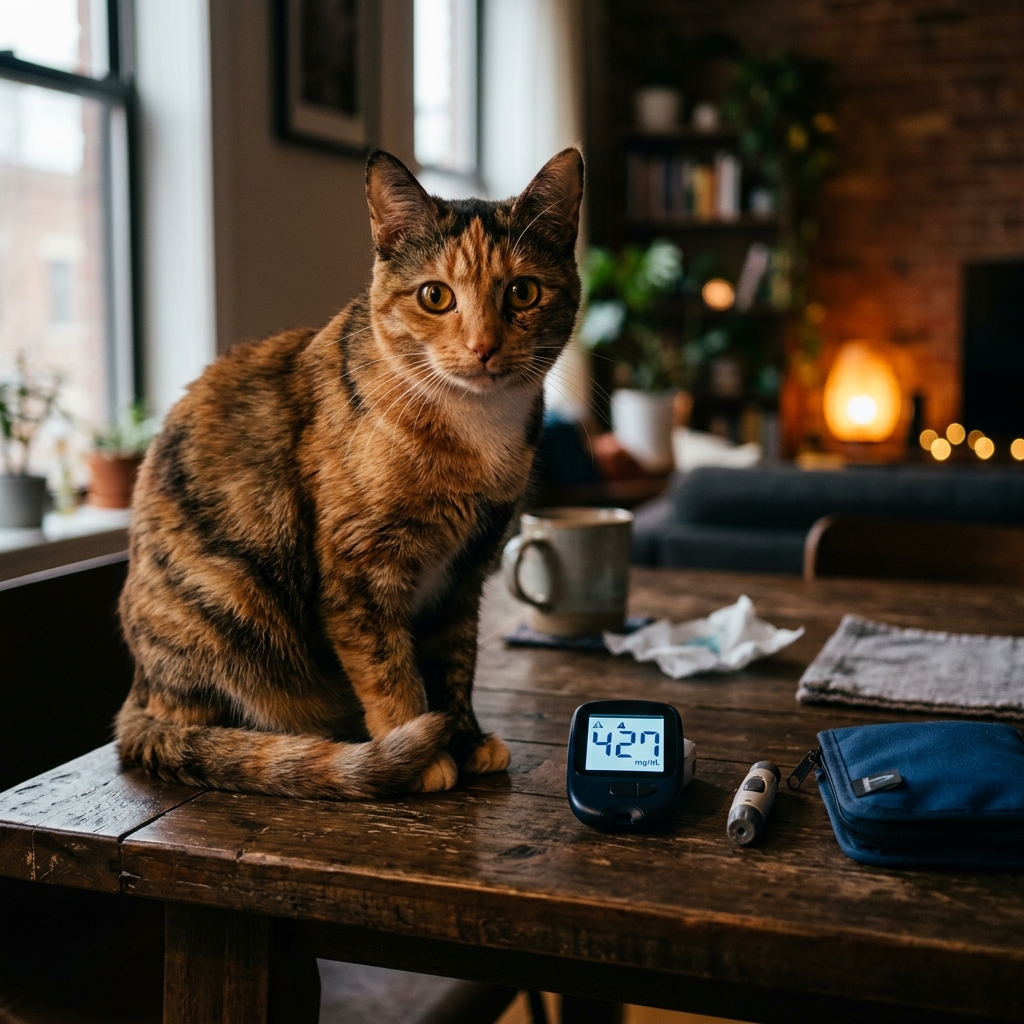

Seeing a 500 mg/dL pop up on your glucose meter is enough to make any cat owner's heart sink. In the veterinary world, this is "Red Alert" territory. At this level, the kidneys can no longer keep up -- they start dumping glucose into the urine, taking vital water and electrolytes down with it. The result? Rapid dehydration and a body on the verge of collapse.
If you're staring at a 500+ reading right now, your next few moves are critical. We're going to cover the immediate steps you need to take, how to tell if your cat is slipping into a life-threatening crisis like Diabetic Ketoacidosis (DKA), and how to finally get those stubborn numbers under control.
Immediate Emergency Steps for High Blood Sugar
When a cat's glucose climbs past 500 mg/dL, you aren't just looking at a "high reading" -- you're looking at a potential crisis that can turn fatal in hours.
1. Call Your Vet Right Now
Do not "wait and see" until morning. If your regular clinic is closed, find the nearest 24-hour emergency hospital. Tell them clearly: "My cat's blood sugar is over 500." This alerts them to prep for stabilization and ketone testing the moment you walk through the door.
2. Lock the Insulin Away (For a Moment)
It's a terrifying number, and your first instinct might be to give an extra "rescue dose" to bring it down. Don't. Winging it with insulin can trigger the "Somogyi Effect" -- a massive rebound spike -- or worse, send your cat into a fatal hypoglycemic crash. Only a vet should authorize a dosage change during a spike this high.
3. Check for Ketones
If you have urine test strips (like Keto-Diastix) in your cabinet, try to catch a sample. You can use non-absorbent litter or just slide a small container under them while they go.
- Trace Ketones: High priority. Dial the vet.
- Moderate to Large Ketones: This is a life-threatening emergency. Drop everything and go to the ER.
4. Keep the Water Flowing
High glucose acts like a sponge, pulling water out of your cat's body and into their urine. They are dehydrating fast. Make sure they have plenty of fresh water bowls nearby. One major warning: never force-feed water with a syringe. If your cat is lethargic, they might inhale the water, leading to aspiration pneumonia.
5. Watch Their Body Language
The number on the meter is just data; the cat's behavior tells the real story. Get to a vet immediately if you see:
- Extreme lethargy (they're "flat out" and won't get up).
- A "drunken" walk or stumbling.
- Vomiting or total refusal of food.
The Real Danger: Diabetic Ketoacidosis (DKA)
Why is 500 mg/dL such a scary number? Because it often opens the door to Diabetic Ketoacidosis. Essentially, your cat's cells are starving because they can't get to the sugar in the blood. In a desperate move to survive, the body starts burning fat for fuel at a manic pace.
The byproduct of this is ketones. While they work as a backup fuel, they are highly acidic. When they flood the system, they poison the blood chemistry and turn the body's internal environment toxic.
Signs Your Cat is in DKA
A "normal" diabetic cat might just be extra thirsty. A DKA cat is profoundly ill. Keep an eye out for these red flags:
- Vomiting: This is usually the first sign that simple diabetes has moved into a metabolic crisis.
- Anorexia: DKA cats almost always stop eating and, eventually, stop drinking.
- "Fruity" Breath: Have you noticed a smell like nail polish remover or fermented apples? That's the smell of ketones.
- The Skin Tent Test: Pinch the skin between their shoulder blades. If it stays up in a "tent" instead of snapping back, they are dangerously dehydrated.
- Heavy Breathing: Deep, rapid breaths (Kussmaul respiration) are a sign the body is trying to "breathe out" the acid buildup.
What Happens at the Hospital?
You cannot treat DKA at home. It usually requires a 2-to-5-day hospital stay involving:
- Aggressive IV Fluids: To flush out ketones and rehydrate.
- Electrolyte Support: DKA causes potassium and phosphorus to tank. Without these, the heart can fail.
- IV Insulin: Vets often use a constant drip of short-acting insulin to walk the glucose levels down safely.
Stabilizing a "Brittle" Diabetic Cat
If your cat hits 500 mg/dL regularly, the current plan isn't working. Chronic highs lead to leg weakness (walking on their hocks) and organ failure. Here is how we usually fix it.
Stop the Carb Overload
Cats are strictly carnivores. Many "prescription" dry foods are actually packed with starch that keeps blood sugar high. Most experts find that a high-protein, ultra-low-carb wet food diet is the most powerful tool we have. Look for "pate" canned foods where carbs make up less than 10% of the calories. This takes the heavy lifting off the insulin.
Rethink the Insulin Type
Not all insulins are created equal for cats.
- The "Rough" Options: Vetsulin or NPH often cause a "harsh" curve -- the sugar drops fast and then rockets back to 500 before the next dose.
- The "Smooth" Options: Many vets (and the AAHA) now prefer Lantus (Glargine) or Levemir (Detemir). These offer a much flatter, more stable 12-hour cycle and give your cat a much better shot at remission.
Find the "Hidden" Saboteurs
If your cat is on a high dose of insulin and still reads 500+, something is fighting back. We call this insulin resistance. Common culprits include:
- Silent UTIs: Bacteria love sugar. Many diabetic cats have infections without any obvious symptoms.
- Bad Teeth: Gum inflammation releases cortisol, which acts like a shield against insulin.
- Acromegaly: A small pituitary tumor that can make a cat nearly immune to standard insulin doses.
The Power of Home Testing
Don't rely solely on the "fructosamine" test at the vet's office. Cats get "stress hyperglycemia" -- simply being at the clinic can spike their sugar by 200 points.
Taking a tiny drop of blood from the ear margin at home gives you the real story. It lets you see how the insulin is working in their natural environment and, most importantly, keeps you from giving a dose if their sugar is unexpectedly low.
Medical Disclaimer: This article is for informational purposes only. A reading over 500 mg/dL is a major medical event. Please call an emergency vet immediately if your cat is showing signs of distress. Never change insulin dosages without professional advice. For more general information, see our comprehensive cat diabetes guide.
A reading of 500 mg/dL is a loud warning that your cat's metabolism is teetering on the edge. By checking for ketones immediately and getting professional help to adjust the protocol, you can pull them back from the brink. Don't get discouraged -- stabilizing a "brittle" diabetic takes time and better data. Between low-carb wet food and home testing, even cats that start in the 500s can find their way back to a happy, stable life. Have you checked your cat's urine for ketones yet today?