From the soft pitter-patter on the hardwood floor to the rhythmic kneading of your favorite blanket, a cat's paws are among their most endearing features. We lovingly call them "toe beans," but these specialized skin structures are actually tiny marvels of biological engineering.
However, many cat owners are surprised to find that these "beans" aren't always a uniform pink. Some cats have black pads, others have a mosaic of spots, and some owners notice the colors shifting over time. This leads to a big question: Is a change in paw pad color just a normal part of aging, or is it a red flag for a health crisis? Let's break down what's normal, what's genetic, and when you should actually worry.
From that soft pitter-patter on the hardwood to the rhythmic kneading of your favorite sweater, a cat's paws are easily their most charming -- and functional -- features. We lovingly call them "toe beans," but these specialized skin structures are actually tiny marvels of biological engineering. They provide the traction needed for a midnight zoomie and the shock absorption for a leap off the fridge.
But have you ever noticed that these "beans" aren't always a uniform pink? Some cats have ink-black pads, others have a mosaic of spots, and sometimes those colors shift over time. If you've been wondering whether a change in paw pad color is just a sign of aging or a reason to call the vet, you aren't alone.
Let's dive into the weird and wonderful world of feline pigmentation and figure out how to tell a harmless freckle from a medical emergency.
The Palette of the Toe Bean: Healthy Paw Pad Colors
A cat's paw pads are essentially thickened, hairless skin covering a dense cushion of fat and collagen. This skin contains melanocytes -- cells that churn out melanin, the same pigment that decides the color of your cat's fur and eyes.
Most healthy cats fall into one of four primary color categories. Getting a handle on your cat's "baseline" color is the first step in being a proactive pet parent.
1. Pink (The Classic Bubblegum Bean)
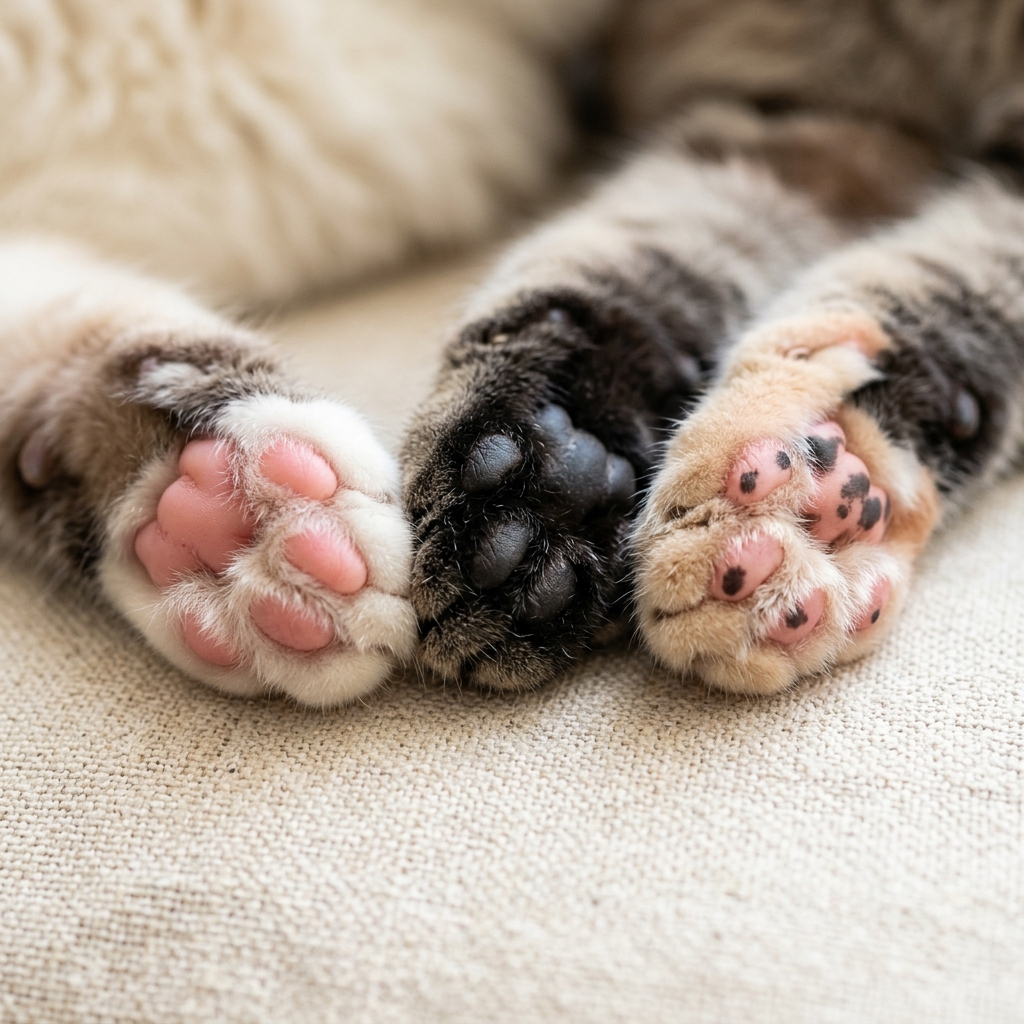
You'll see these on cats with white or very light fur. Because these kitties lack a high concentration of melanin in their extremities, the blood vessels under that thin skin show through. That rosy glow is literally just healthy, oxygenated blood doing its thing.
2. Black or Slate Grey
Solid black cats or "blue" (grey) breeds usually sport dark pads packed with eumelanin. This extra pigment makes the pads look leathery and tough, ranging from a cool charcoal to midnight black.
3. Spotted or Multi-Colored
Calicos, tortoiseshells, and orange tabbies are the queens of the "mixed bean" look. You might see a pink pad with black splotches or a foot where every toe is a different color. It's just genetics playing favorites with different patches of skin.
4. Chocolate, Lavender, and Cinnamon
In the world of purebreds, colors get fancy. Havana Browns often have cocoa pads, while Lilac-point Persians might show off a muted, dusty purple or cinnamon hue.
The Genetic Link: Why Fur and Paw Pads Match
Usually, the genes that decide your cat's coat also call the shots for their paws. This happens because pigment-producing cells migrate through the embryo during development, usually landing on the nose and paws in a pattern consistent with the rest of the body.
- White Cats: Usually pink pads.
- Black Cats: Almost always black or dark grey.
- Orange Tabbies: Typically pink or peach (and they're most likely to get "freckles").
- Pointed Breeds (Siamese): Their pads generally match their "points" -- dark brown for a Seal Point, for instance.
Normal Color Changes: When Is It Natural?
Good news: your cat's paw color isn't always set in stone. While a total 180-degree flip is rare, subtle shifts happen for perfectly normal reasons.
Aging and Lentigo (Feline Freckles)
If you share your life with an orange or calico cat, you might see small black spots pop up on their pads or nose as they get older. This is Lentigo Simplex. These are just cat freckles -- flat, dark patches that are purely cosmetic. If the spot is flat and doesn't bother them, it's fine. If it becomes raised or scaly, that's when you call the vet.
Temperature and Physical Activity
Think about how your face flushes after a run. A cat's pink pads can deepen to a bright red when they've been sprinting or if they're a bit too warm. Cats actually dissipate some heat through their paws, so that dark pink color is just a sign of increased blood flow.
Friction and Calluses
Outdoor adventurers or high-energy indoor cats often develop "tougher" skin. Constant friction against rough floors can lead to hyperkeratosis (think of it as a feline callus). This can make pink pads look a bit yellowish, tan, or "dirty."
Concerning Color Changes: Signs of Illness
This is the part where you need to pay attention. If your cat's pads change color suddenly and across the board, it's usually a red flag for circulation or oxygen issues.
Sudden Paleness (White or Ghostly Pink)
If your cat's normally pink pads suddenly look like they've seen a ghost, it's a medical emergency. This suggests a lack of blood flow or severe anemia.
- Watch for: Lethargy, pale gums, and paws that feel cold.
Bluish or Purple Tint (Cyanosis)
A blue or purple hue means the blood isn't carrying enough oxygen.
- The Cause: Heart disease, respiratory distress, or a dangerous blood clot.
- Action: This requires an immediate trip to the emergency vet.
Yellowish Tint (Jaundice/Icterus)
If those pink beans start looking yellow, it's a sign of high bilirubin levels.
- Check: Look at the whites of their eyes and the skin inside their ears. If those are yellow too, their liver or gallbladder is likely in trouble.
Deep Red or Inflamed
If the pads look raw, swollen, or angry red, your cat might be dealing with chemical burns from a floor cleaner, heat from hot pavement, or an immune condition called "Pillow Paw."
Feline Conditions That Target the Beans
Plasma Cell Pododermatitis ("Pillow Paw")
This is an immune-mediated quirk where the body sends too many plasma cells to the feet. The large central pads become soft, mushy, and swollen. They might look purple and can eventually bleed if not treated with meds like doxycycline.
Vitiligo
Rare, but it happens. A cat with black pads might see them slowly turn pink or white as their pigment-producing cells disappear. It doesn't hurt; it just changes their look.
What to Do If You Notice a Change
Checking your cat's "toe beans" should be a regular part of your cuddle routine. If something looks off, run through this checklist:
- Watch the walk: Is the cat limping or over-grooming their feet?
- Peep the gums: Healthy gums should be a nice bubblegum pink. If they're pale or blue, the paw color change is serious.
- Feel the heat: Are the pads ice-cold or unusually hot?
- Snap a photo: Take a clear picture. It's way easier to show a vet "how it looked yesterday" than to describe it from memory.
When to See a Vet
Cats are masters at hiding pain and understanding feline body language is key to early detection. Head to the vet immediately if:
- The paw color change comes with heavy, open-mouthed breathing.
- The paws are ice-cold and the cat can't seem to use their back legs (this could be a life-threatening blood clot).
- The pads are bleeding, oozing, or cracked.
- A dark spot is raised, bumpy, or growing fast.
The next time your cat stretches out for a nap, take a second to really look at those paws. Whether they're pink, black, or a funky mix of both, they're a direct window into how your cat is feeling on the inside. Keeping an eye on the beans is just one more way to make sure your feline friend stays around for a long, healthy life.
By keeping a close eye on those colorful "toe beans," you can catch health issues long before they become emergencies. Whether your cat sports classic bubblegum pink or dramatic slate black, those paws are a testament to the intricate beauty -- and warning systems -- of feline biology. So, the next time your cat offers up a paw for a high-five or a "knead," give those beans a quick inspection. It's the easiest health check you'll ever do.