With those tufted ears and manes that would make a lion jealous, Maine Coons are the heavyweights of the cat world. We call them "gentle giants" for a reason -- they're hardy, robust, and full of personality. But that unique look comes with its own set of challenges, and Maine Coon eye health is one area that often gets ignored until there's a real problem.
Those big, expressive eyes are a breed hallmark, but the same facial structure that makes them look so majestic can also lead to chronic irritation and hardware issues. Knowing the difference between a bit of morning "eye junk" and a sight-threatening emergency is part of the job when you own one of these cats. Let's break down the common conditions, what that discharge is actually telling you, and when you need to stop googling and start driving to the vet.
The Unique Anatomy of Maine Coon Eyes
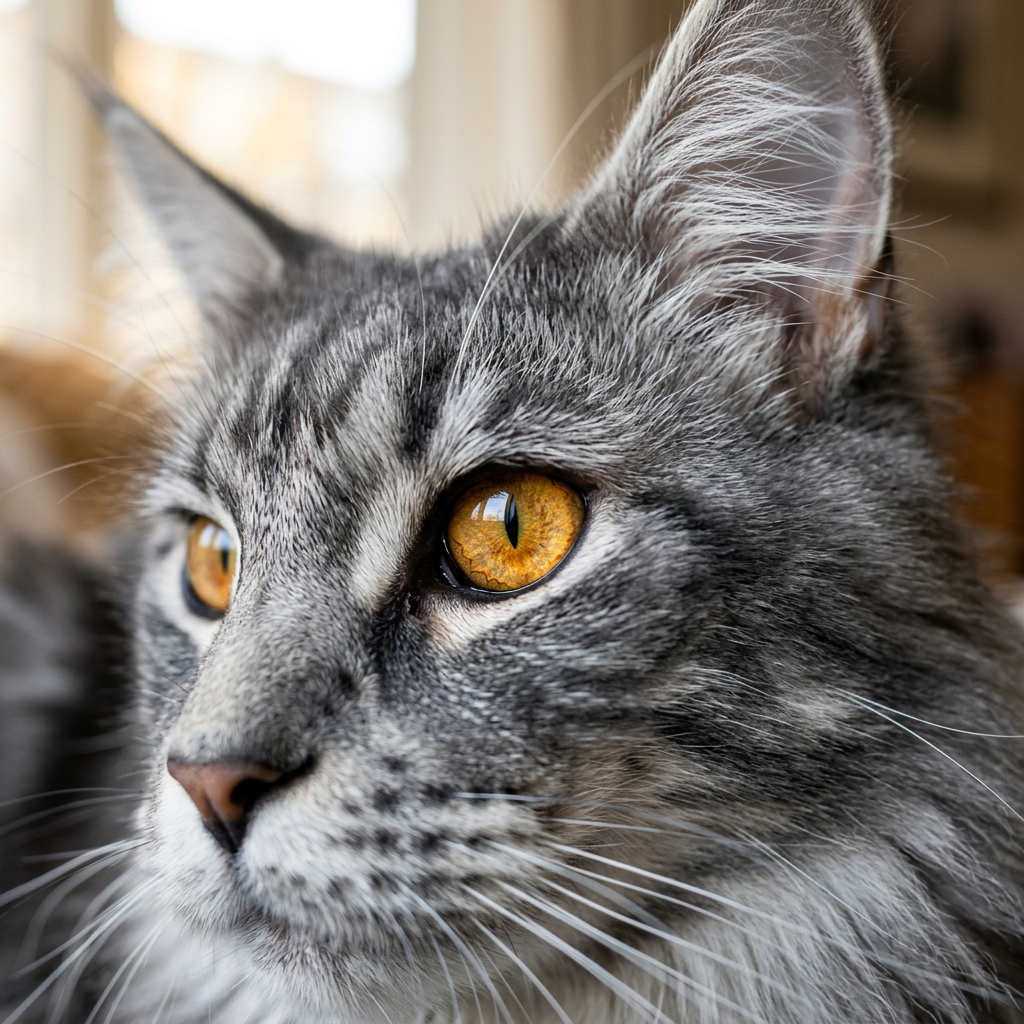
Maine Coons have those strikingly large, oval eyes that seem to look right through you. Set wide apart and framed by a heavy brow and prominent muzzle, they give the breed that iconic "wild" look we all love. But there's a trade-off for that beauty: the sheer size of their eyes and the forest of fur surrounding their face can make them magnets for dust, debris, and irritation.
Genetics also play a role you can't ignore. Because the breed rose from a relatively small gene pool, certain hereditary eye issues are baked into some lineages. While reputable breeders do their best to screen for these, you still need to keep a close watch. Some of these conditions creep up slowly or only pop up when triggered by something in the environment. Following a guide to healthy eyes and sharp vision can help you stay ahead of these risks.
Common Eye Conditions in Maine Coons
Entropion: When Eyelids Attack
Entropion is a big one for this breed. It is a structural defect where the eyelid -- usually the bottom one -- rolls inward. This means the hair and lashes are constantly scraping against the sensitive cornea. Imagine having a permanent eyelash in your eye that you can't blink away.
In Maine Coons, this is often a byproduct of their massive size and heavy facial features. If you don't get it fixed, the constant friction leads to:
- Constant pain and squinting.
- Corneal ulcers (nasty open sores).
- Pigmentary keratitis, where the eye literally turns dark to protect itself, eventually blocking the cat's vision.
- Permanent scarring.
The fix is usually a surgery called blepharoplasty, which essentially reshapes the lid so it sits where it's supposed to.
Conjunctivitis (Pink Eye)
In the cat world, "pink eye" isn't just a nuisance. It is almost always a sign of an underlying infection rather than just a simple allergy.
- Feline Herpesvirus-1 (FHV-1): This is a classic culprit for chronic, "on-again, off-again" eye issues.
- Calicivirus: Usually brings friends like mouth ulcers or sneezing.
- Chlamydia and Mycoplasma: These bacteria cause major swelling and that thick, nasty discharge nobody wants to see. Dealing with cat eye infections requires prompt action to prevent long-term damage.
Corneal Ulcers
Think of a corneal ulcer as a crater on the clear front surface of the eye. Because Maine Coons are active and have so much facial fur, they are prone to these. A stray hair, a playful swipe from another cat, or even the friction from Entropion can cause one. These are incredibly painful. If bacteria get in there, the eye can actually start to "melt" or rupture. It is a true medical emergency.
Progressive Retinal Atrophy (PRA)
PRA is a genetic "wasting away" of the retina. It is not as common here as it is in Persians, but it is definitely in the Maine Coon gene pool. The first thing you might notice is "night blindness" -- your cat might get jumpy or refuse to move in a dark room. There is no cure yet, but the good news is that cats are incredibly resilient and usually navigate just fine using their whiskers and ears as long as you don't move the furniture around.
Uveitis
Uveitis is internal inflammation, and it is often a "check engine light" for the rest of the body. If your cat's eyes suddenly look red or cloudy deep inside, it could be a sign of something serious like FIV, FeLV, or FIP. This isn't a "wait and see" situation; get to the vet immediately.
Decoding Eye Discharge: What is Normal?
Not every "eye booger" is a crisis, but the color tells a story.
Clear and Watery
If your cat's eyes are just "leaking" clear fluid, consider these possibilities:
- Allergies: Dust or strong perfumes can easily bug them.
- Blocked Tear Ducts: Some cats have narrow plumbing. If the tears can't drain into the nose, they spill down the face.
- A "Cat Cold": Most viral respiratory infections start with clear tearing.
Yellow or Green (The "Gunk")
Thick, sticky, or colored discharge is a red flag for infection. This stuff is packed with white blood cells fighting a losing battle. You'll almost certainly need prescription drops or ointments to clear this up.
Rusty or Brown Stains
Ever see those reddish-brown streaks in the corners? That is Porphyrin. It's an iron-rich molecule found in tears and saliva. When it hits the air, it oxidizes and turns that "rusty" color.
- Is it normal? If the eye looks clear and the cat isn't squinting, it is probably just normal tearing that is dried out. Just wipe it away.
- When to worry: If it smells bad or the skin underneath looks raw (like a diaper rash), it is time for a check-up.
Cloudiness: When the Sparkle Fades
A healthy eye should look like a clear glass marble. If it gets foggy, pay attention.
Cataracts vs. Nuclear Sclerosis
Cataracts look like a milky white block inside the eye. They block light and eventually cause blindness. Most feline cataracts are actually caused by old injuries or internal inflammation.
On the other hand, many senior Maine Coons get a bluish-grey haze called Nuclear Sclerosis. This is just a normal part of getting older -- it's like the lens is becoming more "dense." It doesn't usually hurt their vision and doesn't need treatment.
Glaucoma
This is a buildup of pressure inside the eye, and it is just as painful as it sounds. Because cats are stoic, it's often missed until it's advanced. Look for a "steamy" looking cornea or one eye appearing larger than the other. If caught late, the only way to stop the pain is often to remove the eye.
When to Call the Vet (Don't Wait!)
Eye issues move fast. A tiny scratch can turn into a lost eye in 48 hours. Call the vet if you see:
- Squinting: This is the universal cat sign for "My eye hurts."
- The Third Eyelid: If that little white membrane in the corner stays visible while they're awake, they are either in pain or feeling very sick.
- Uneven Pupils: One big, one small? This is a neurological emergency. Stop reading and go to the vet.
- Paw Rubbing: If they won't stop batting at their eye, they are going to scratch the cornea themselves.
- Behavior Changes: If your jumper suddenly stays on the floor or starts bumping into things, their vision might be failing fast.
Maintenance Tips for Bright Eyes
- Clean the Air: Avoid heavy dust and "stinky" cleaners. Maine Coons have a lot of eye surface area to catch those irritants.
- The "Wild Hair" Trim: If you're brave and have steady hands, use round-tipped scissors to keep those long facial hairs from poking the eyes.
- The Daily Wipe: A soft, damp cloth is your best friend. Keep that area clean to prevent skin irritation.
- Good Food: Omega-3 fatty acids aren't just for fur; they support the mucous membranes and help keep inflammation down.
Medical Disclaimer
The info here is for educational purposes. I'm not a vet, and this doesn't replace a real exam. If your cat's eye looks weird, go see a professional.
References
- AAHA "Feline Ophthalmology Basics"
- Merck Veterinary Manual
- PubMed / NIH Genetic Predispositions
- Cornell University Feline Health Center
Maine Coons are tough, but their eyes are delicate. Keeping them healthy isn't just about looking for big problems; it's about the daily check-in. Notice a new squint? See a change in discharge color? Don't second-guess yourself -- get it checked.
When in doubt, remember that eyes don't "heal themselves" very well. Early intervention is almost always the difference between a quick fix and a permanent loss of sight. Keep those "gentle giant" eyes bright, and they'll keep watching over your household for years to come.