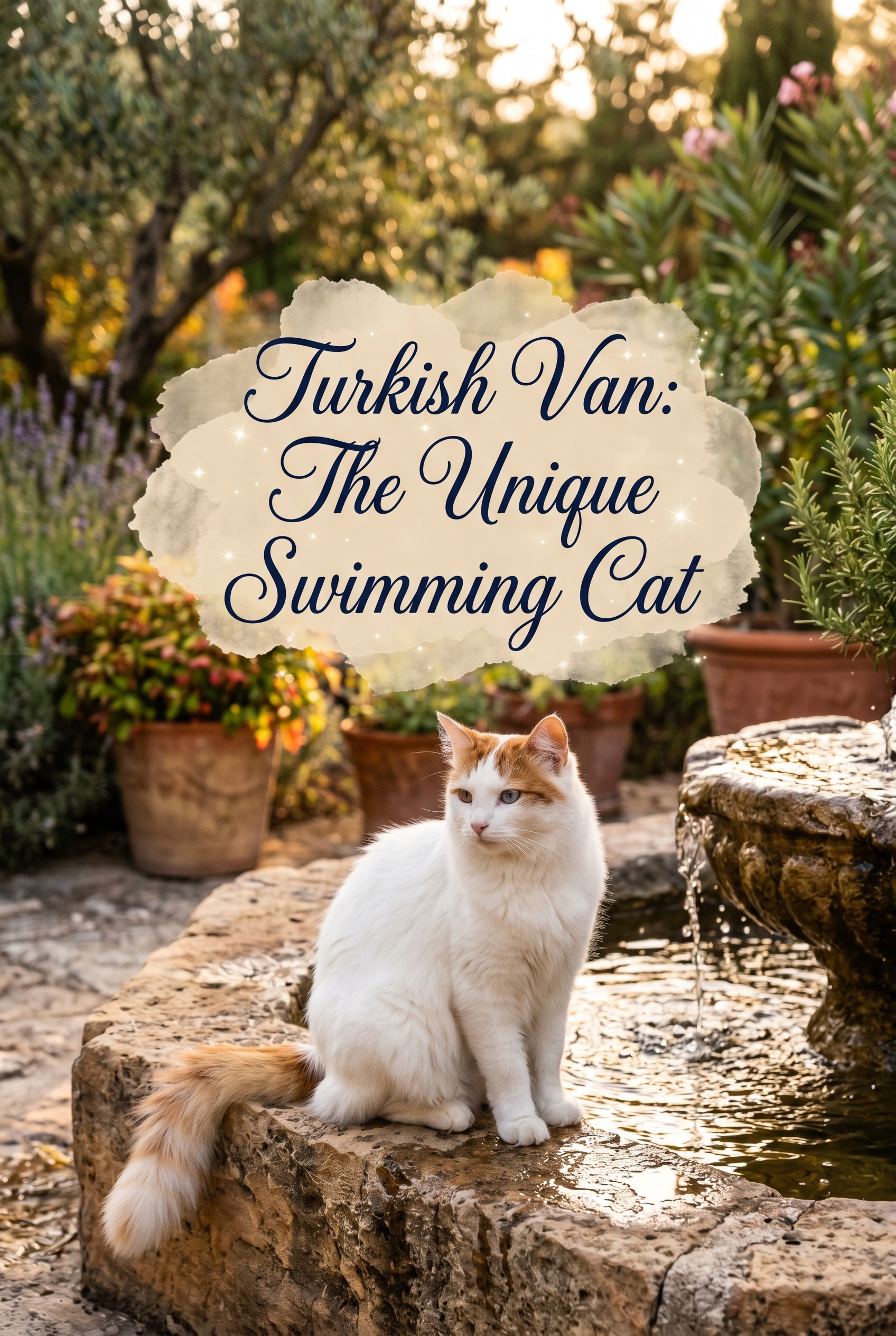
Meet the Turkish Van, a breed that defies feline stereotypes with its legendary love of water and boundless energy. Known as the Swimming Cat, this ancient natural breed is more than just a striking face with its distinctive white coat and 'van' markings. Intelligent, loyal, and incredibly active, these cats form deep bonds with their families. Whether they are splashing in a sink or playing fetch, the Turkish Van offers a unique and engaging companionship experience unlike any other feline.
History & Origin
The Turkish Van's story begins in the rugged, lake-dotted region of eastern Turkey, particularly around Lake Van, from which it takes its name. Unlike many modern breeds, the Van is considered a natural breed, shaped over centuries by the climate and geography of its homeland. These "swimming cats" were established in the West during the mid-20th century when photographers Laura Lushington and Sonia Halliday brought a pair to the UK. The Turkish Van was officially recognized by major cat registries in the 1970s and remains a rare, treasured breed today. For those interested in how they compare to other regional felines, check out our Turkish Angora vs. Turkish Van guide.
Physical Characteristics
The Turkish Van is a powerful, muscular cat, with males often weighing up to 9 kg. They possess a semi-longhaired coat with a cashmere-like texture that lacks a woolly undercoat. This unique single coat is famously water-resistant, a key Turkish Van physical characteristic. The most iconic feature is the Van pattern: a white body with color restricted to the head and tail, often in red, cream, black, or blue. Their eyes can be blue, amber, or "odd-eyed" (one of each), adding to their captivating appearance. It shares its elegant semi-longhair status with the Turkish Angora, though their body types differ significantly.
Temperament & Personality: The Swimming Cat
This breed is a dynamo of personality. Scoring high in playfulness and intelligence, the Turkish Van temperament is that of an active problem-solver. They are intensely loyal, often forming a "one-person" bond while remaining friendly with children. Their most famous quirk is a genuine fascination with water; do not be surprised to find them paddling in a sink or playing with dripping taps. Because they can be strong-willed, they are best suited for owners who enjoy an interactive pet.
Turkish Van Care & Exercise Requirements
Their unique coat requires moderate grooming; weekly brushing is usually enough to manage shedding and maintain that silky texture. However, their high exercise needs are non-negotiable. Provide robust cat trees, interactive puzzle toys, and fetch games to engage their brilliant minds. A secure catio or leash training can be ideal for supervised outdoor exploration, making them one of the best active cat breeds for adventurous owners.
Health Considerations
The Turkish Van is generally a robust breed with a long lifespan of 12–17 years. Like many purebreds, they can be predisposed to hypertrophic cardiomyopathy (HCM). Responsible Turkish Van breeders screen for this heart condition to ensure kittens are healthy. Regular veterinary checkups are essential for monitoring long-term wellness and nutritional needs, especially given their athletic nature.
The Turkish Van is a magnificent paradox: a water-loving cat with an ancient history and a playful, modern soul. If you are looking for an intelligent, loyal, and active companion that defies typical feline stereotypes, the Turkish Van is an extraordinary choice.