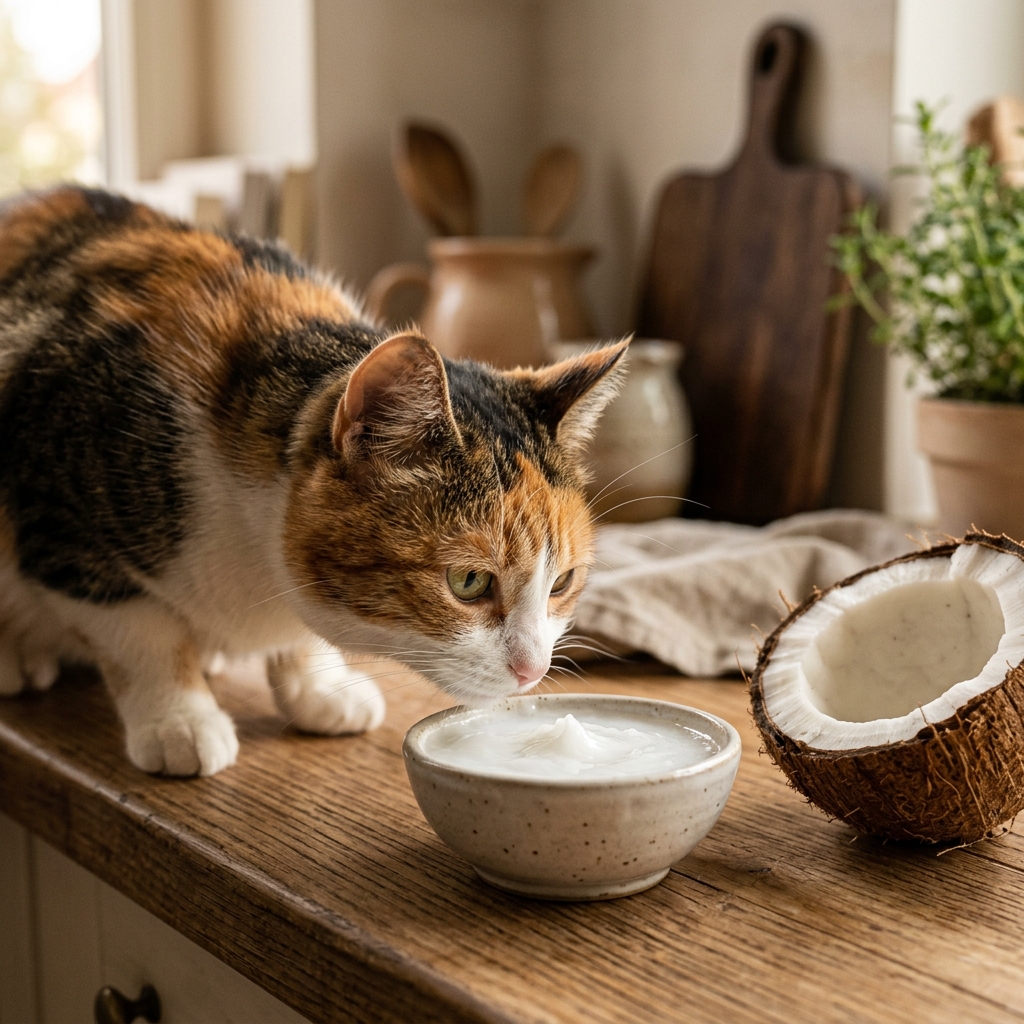
Ever left a jar of virgin coconut oil open only to find your cat sniffing it like it’s the finest tuna? You aren't alone. Many cat owners notice their pets rubbing their cheeks against coconut-scented items or even trying to sneak a lick from a spoon. It’s a curious behavior for an obligate carnivore, leaving many to wonder: what is it about this tropical scent that drives cats wild?
To us, coconut smells like a beach vacation. To a cat, the appeal is rooted in raw biology and evolution. They aren't looking for a piña colada—they’re detecting chemical signatures that signal high-value nutrition to their specialized senses. Let’s look at the science behind why your cat is so attracted to coconut and, more importantly, how to let them enjoy it safely.
The Sensory World of the Cat
To understand why your cat might be obsessed with coconut, we have to look at how they "see" through their nose. A cat's sense of smell is roughly 14 times stronger than ours. While we get by with about 5 million odor-sensitive cells, cats are operating with nearly 200 million. They also have a secret weapon: the vomeronasal organ, or Jacobson's organ, tucked into the roof of their mouth. This lets them "taste-smell" certain aromas—specifically fatty acids and pheromones.
When a cat gets a whiff of coconut, they aren't thinking "tropical vacation." Since cats are obligate carnivores, they actually lack the taste receptors for sweetness. Their attraction has nothing to do with a sugar rush and everything to do with chemistry.
The Lauric Acid Connection: A Neonatal Memory?
One fascinating theory involves lauric acid. Coconut oil is packed with this medium-chain fatty acid, which also happens to be a major component in mammal milk.
Is it possible the scent triggers a "mommy" memory? Some behaviorists think so. This specific lipid profile might subconsciously take a cat back to their days as a nursing kitten. It explains why some cats start making biscuits or rubbing their faces intensely against a jar of oil. They're essentially tapping into a deep-seated biological comfort zone.
The "Meaty" Scent of Fats
To a cat's nose, coconut oil likely smells a whole lot like animal fat. Cats evolved to track down calorie-dense lipids for survival, and their olfactory system is finely tuned to catch that scent from a distance.
Virgin coconut oil has a fatty acid profile that closely mirrors the structural components of animal fats. While you smell something nutty, your cat's brain is registering a "savory energy source." To them, that jar isn't a vegetable product; it's high-octane fuel that their instincts tell them to investigate.
The "Catnip Lite" Effect
Ever seen a cat act a little "spacey" around coconut? Some owners report drooling, rolling, or over-the-top affection after a sniffing session. This has led to the "Catnip Lite" theory.
While we're still waiting on clinical proof, the idea is that certain volatile compounds in coconut might interact with the Jacobson's organ in a way that mimics nepetalactone—the active ingredient in catnip. If these compounds trick the brain into thinking they've found feline pheromones, it can trigger a brief, happy state of euphoria.
Why Some Cats Are More Curious Than Others
Just like humans, cats have individual tastes. Not every feline will go wild for coconut, but those who do are usually driven by three things:
- Lipid Density: They are hardwired to find fats. Period.
- Zero Warning Signs: Cats hate "sharp" smells like citrus, vinegar, or peppermint. Coconut is mild and creamy, lacking any chemical "stay away" signals.
- Low Melting Point: If they get a taste, it hits differently. Coconut oil melts at about 76 degrees, meaning it turns to liquid the second it touches a cat's tongue.
Is Coconut Oil Safe for Cats?
The ASPCA and the Merck Veterinary Manual list coconut oil as non-toxic for cats. It's not a "danger zone" food like grapes or chocolate. However, just because it won't poison them doesn't mean they should eat the whole jar.
Since it's 100% fat, treat it as an occasional supplement, not a meal. Most vets suggest keeping it to about 1/8 to 1/4 teaspoon once or twice a day at most.
Potential Risks: The Downside of Fat
Coconut's biggest risk is how rich it is. Too much fat can lead to some messy (and painful) situations:
- Digestive Upset: It can act as a laxative, leading to greasy stools, diarrhea, or vomiting.
- Pancreatitis: High-fat snacks can trigger painful inflammation of the pancreas. If your cat has a history of health issues, skip the coconut oil entirely.
- Hyperlipidemia: Over time, too much fat in the blood can complicate underlying health problems.
Topical Usage and the "Licking" Problem
Coconut oil is a popular DIY remedy for dry paw pads or "stud tail." It's a great moisturizer, but remember: cats are professional groomers. Whatever you put on their skin, they will lick off. This turns your topical treatment into an oral dose, so don't over-apply it.
Fresh Coconut vs. Coconut Water
If you're cracking open a fresh one, here is the breakdown:
- Fresh Meat: Tiny, pea-sized pieces are okay once in a while. Just watch out for bloating; the fiber and fat combo can be tough on their system.
- Coconut Water: Skip it. It's high in potassium, and cats with kidney issues can end up with hyperkalemia, which messes with heart rhythms.
- Coconut Milk: Most store-bought versions have thickeners like guar gum. Worse yet, some "sugar-free" versions are sweetened with xylitol, which is deadly for pets.
Nutritional Facts (Approx. per 1/4 tsp)
| Component | Amount |
|---|---|
| Calories | ~9-10 kcal |
| Total Fat | 1.1 g |
| Saturated Fat | 0.9 g |
| Lauric Acid | ~500 mg |
Using Coconut for "Scent Enrichment"
If your cat loves the smell but their stomach says "no," try olfactory enrichment. It's a great way to keep an indoor cat's brain busy without the calories. For picky eaters, you might also consider best cat food toppers to encourage healthy habits.
Drop a little oil into a perforated container that they can sniff but can't actually eat. They get all the "meaty" aroma and the "catnip-like" vibes without the risk of weight gain.
Debunking the Myths
Don't believe everything you read on a forum. Let's look at the facts:
- "It cures hairballs": It might help lubricate things, but it's not a cure. If your cat is hacking up hairballs constantly, check for skin or gut issues.
- "It kills fleas": Lauric acid is antimicrobial, but it's no match for a flea infestation. Stick to vet-recommended meds.
- "It's a complete protein": No. It is almost entirely fat.
When to Call the Vet
If your cat downs a bunch of oil, keep a close eye on them for 48 hours. Call the vet if you see:
- Repeated vomiting.
- Diarrhea lasting more than a day.
- A hunched posture (indicates abdominal pain).
- Loss of appetite.
If your cat has diabetes, kidney disease, or IBD, even a small amount can cause a flare-up. If you're looking for safe treats for cats that won't cause these issues, stick to expert-approved options.
Medical Disclaimer
This guide is for informational purposes. If you're planning to add any oil or supplement to your cat's routine, talk to your vet first—specifically if your cat has a chronic condition.
Do cats like the smell of coconut? For many, it’s a resounding yes. Their attraction has nothing to do with the "tropical vacation" vibes we love, and everything to do with specific fatty acids—namely lauric acid—that mimic the high-energy profile of animal fats or even their mother’s milk.
Think of coconut oil as a high-calorie garnish rather than a superfood. A tiny bit can be a fun sensory experience, but overdoing it is a one-way ticket to an upset stomach. Keep portions small, keep it occasional, and enjoy watching your cat explore the weird and wonderful world of "taste-smelling." Have you noticed your cat leaning in for a sniff next time you open a jar?