Meet the British Longhair: the feline version of a cozy wool blanket. This breed is the perfect choice for anyone who wants the elegance of a Persian but the low-key "chill" of a British Shorthair. From their accidental history to their legendary laziness, here is the lowdown on sharing your life with one of these plush giants.
British Longhair Guide: Personality, Care & Traits
The British Longhair is essentially a living, purring teddy bear. If you're looking for a calm, regal companion with a coat like a wool blanket, this may be your perfect match.
On this page
- British Longhair Guide: Personality, Care & Traits
- Origin and History: A Happy Accident
- Physical Characteristics: The Living Teddy Bear
- That Luxurious Semi-Long Coat
- Temperament: The Ultimate Lounge Lizard
- Personality and Family Life
- Grooming and Daily Care
- Health and Longevity
- Cost Considerations
- Is This Breed Right for You?
- Great Fit If:
- Not the Best Fit If:
- Frequently Asked Questions
- Are British Longhairs good apartment cats?
- How long do British Longhairs live?
- Do British Longhairs shed a lot?
- Are British Longhairs good with children and other pets?
- What's the difference between a British Longhair and a British Shorthair?
- How much grooming do British Longhairs really need?
- Do British Longhairs have health problems specific to the breed?
- Are British Longhairs vocal?
- Conclusion
Keep your cat's health in one place
A free account saves your cat's profile, weights, vaccines and care reminders — and the assistant can then answer with your cat in mind.
Sign Up FreeBritish Longhair Guide: Personality, Care & Traits
Medically reviewed by Dr. Sarah Mitchell, DVM — updated July 17, 2026. Dr. Mitchell is a small-animal veterinarian with a focus on feline preventive care. This guide follows the TICA British Longhair breed standard and the CFA British Shorthair breed profile and registration rules — CFA registers the longhair variety under the British Shorthair breed rather than as a separate breed — with health information drawn from peer-reviewed veterinary literature.
If you've ever wanted a cat that looks like a high-end plush toy and acts like a retired literature professor, you've found your match. The British Longhair is the majestic, fluffier sibling of the British Shorthair. These are gentle giants that bring a certain regal flair to your sofa without demanding you spend your life entertaining them.
Origin and History: A Happy Accident
The British Longhair didn't just appear out of nowhere; it's a living piece of feline history. According to the TICA British Longhair breed profile, breeders began crossing British Shorthairs with imported Persians between 1914 and 1918 to reinforce coat density and the rounded, stocky frame the breed is known for. The fluffy kittens that resulted were usually redirected into Persian breeding programs or quietly placed as pets.
For years, the longhair kittens that popped up in Shorthair litters were the industry's "little secret." After World War II, when British Shorthair breeding stock was nearly wiped out, remaining lines were crossed with domestic shorthairs, Russian Blues, and Persians — which is how the longhair gene kept surfacing. Eventually TICA granted the British Longhair championship status effective May 2009, giving it formal recognition as a companion breed to the British Shorthair. If you're torn between similar styles, checking out the British Shorthair vs. American Shorthair debate might help you narrow down your perfect match.
Physical Characteristics: The Living Teddy Bear
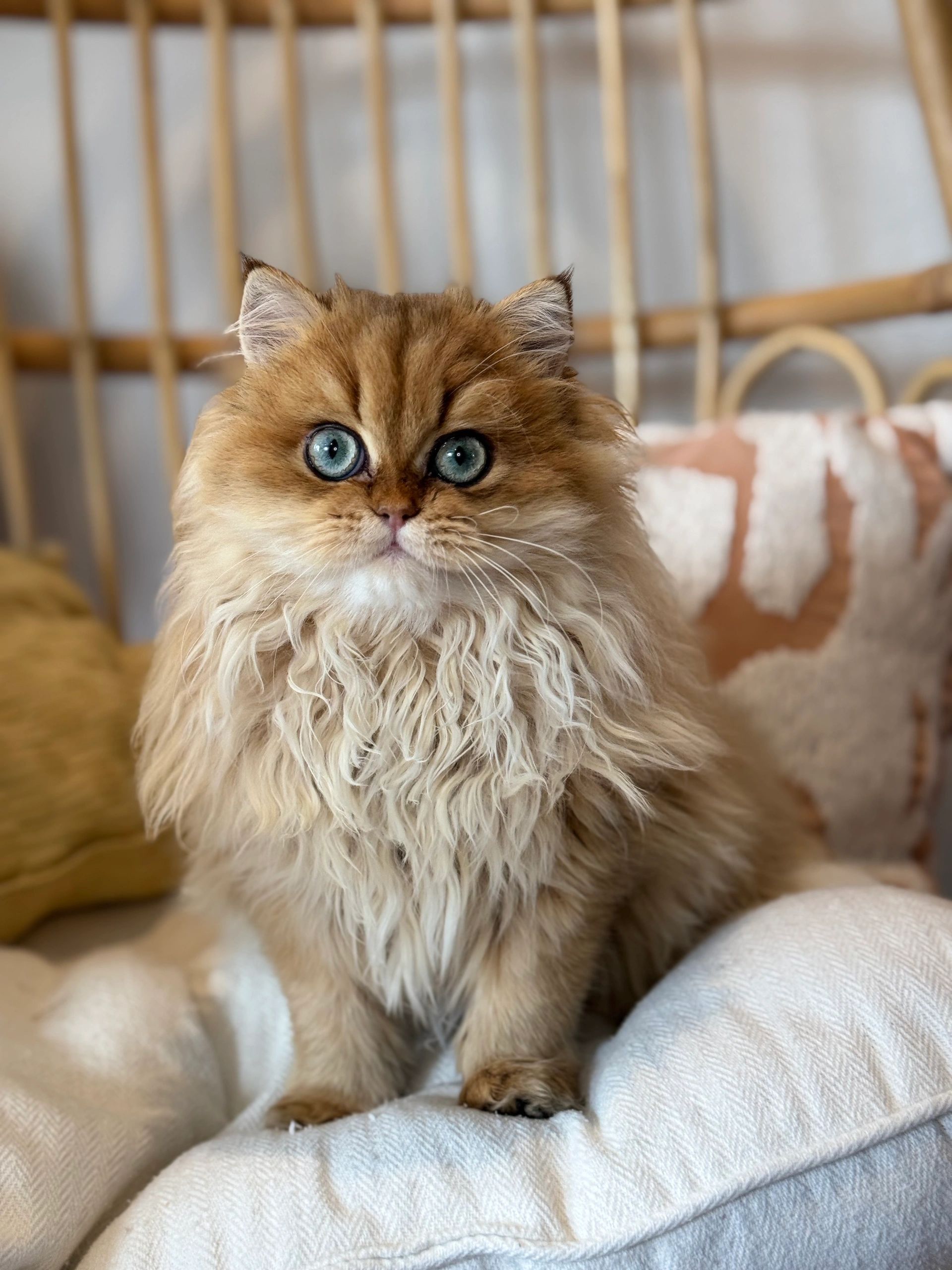
If you saw a British Longhair in a toy store, you'd probably reach for a price tag. They have broad, round heads, chubby cheeks, and a short, straight nose that gives them a permanent "I'm content" expression. Their eyes are huge — round pools of copper, gold, or green that seem to watch the world with quiet curiosity.
Under all that fluff is what breeders call a cobby build. Translation: they're sturdy, muscular, and built low to the ground. Don't let the cuteness fool you; these are substantial cats. According to the TICA breed standard, adult females typically weigh 8–11 pounds and adult males 10–16 pounds.
That Luxurious Semi-Long Coat
The coat is the main attraction. It's semi-long, incredibly dense, and feels like high-end wool. Because it's weather-resistant and stands away from the skin, it makes the cat look roughly twice its actual size. They usually rock a magnificent ruff around the neck — think a tiny, domestic lion — topped off with a thick, plumed tail they carry like a banner.
Temperament: The Ultimate Lounge Lizard
If you want a cat to do backflips off your bookshelves at 3 AM, look elsewhere. The British Longhair temperament is famously sedentary. They are the supreme "lounge lizards" of the cat world, perfectly happy to spend six hours watching a single sunbeam move across the rug. While they're deeply loyal, they aren't "Velcro cats." You'll likely find them sitting near you on the couch rather than directly on your keyboard.
In my own clinic, the British Longhair patients are consistently among the calmest on the exam table — a temperament feature that genuinely helps me auscultate the heart and palpate the kidneys without chemical restraint. They're also the cats I've most often seen fall asleep in their carrier on the way home. That same placidity, though, means behavioural problems tend to creep in unnoticed: a British Longhair that suddenly hides or stops jumping usually signals pain, not mood.
Personality and Family Life
These cats have the patience of a celebrity on a press tour. Their calm, unflappable nature makes them a dream for families with kids or dogs that know how to respect boundaries. They aren't the type to scream for dinner; instead, expect soft, polite chirps and gentle purrs. There's an unmistakable "gentlemanly" dignity to the way they carry themselves.
Grooming and Daily Care
They might be low-energy, but they are definitely high-maintenance when it comes to hair. That dense undercoat is a magnet for mats. You'll need to brush them at least two to three times a week to keep things from getting knotted. When shedding season hits, prepare for a daily ritual unless you want your living room to look like it's growing its own carpet.
In my own practice, the patients who tolerate brushing best are the ones whose owners introduced a soft brush during weekly kitten handling from about eight weeks old — right inside the prime socialisation window. Even older British Longhairs can be retrained to accept grooming; it just takes shorter sessions, a quiet room, and a high-value treat at the end.
Grooming essentials:
- Slicker brush: Best for daily maintenance and removing loose undercoat.
- Wide-tooth comb: For working through tangles before they become mats.
- Dematting tool: For the occasional mat that brushing can't resolve.
- Nail clippers: Every 2–3 weeks.
- Toothbrush and cat-safe toothpaste: Daily or every-other-day brushing.
Keep an eye on the food bowl. British Longhairs love their snacks and aren't exactly Olympic athletes, which makes weight gain a real risk. High-quality nutrition and strict portion control aren't just suggestions — they're essential to keeping those joints healthy for the long haul. I generally recommend a measured meal (rather than free-feeding) and a body-condition check every two to four weeks at home — run your hands along the ribcage; you should feel the ribs easily under a thin layer of fat.
Health and Longevity
Most British Longhairs live 12 to 15 years. As with any pedigree breed, several inherited conditions warrant attention:
- Polycystic Kidney Disease (PKD): An autosomal dominant condition in which fluid-filled cysts form in the kidneys and progressively impair renal function. Ultrasonographic screening has been the standard screening tool since the early 2000s. Barthez, Rivier & Begon, Journal of Feline Medicine and Surgery (2003) documented a 41.8% prevalence in French Persians and 39.1% in Exotic Shorthairs, consistent with parallel surveys in the UK, Australia, Germany, and the US (see also Cannon et al., Veterinary Record (2001) for UK prevalence).
- Hypertrophic Cardiomyopathy (HCM): The most common feline cardiac disease, with a familial basis in British lines confirmed by a cohort study of British Shorthairs in Denmark by Riesen et al., Journal of Veterinary Internal Medicine (2011). Echocardiographic screening and HCM genetic testing are both recommended for breeding stock.
- Hemophilia B: An X-linked factor IX deficiency first documented in a family of British Shorthair cats by Gavaghan et al., JAVMA (1993) and tracked in the UFAW Genetic Welfare Problems profile on British Shorthair haemophilia B. DNA testing is available and reliable.
- Obesity-related issues: Excess weight predisposes British Longhairs to joint stress, lameness, and diabetes, particularly given their sedentary disposition.
In my own practice, I have screened several British-type cats for PKD by ultrasonography and have seen young adults present with bilateral renal cysts traceable to unscreened parent lines — a reminder of why breeder health documentation matters as much as it does. I have also treated more mat-related dermatitis in British Longhairs than in almost any other breed, almost always in cats whose owners were brushing less than twice a week. I still recall one seven-year-old neutered male whose spring coat blow was ignored for ten days; the pelt-like matting that resulted required sedation to shave out, and the bill ran roughly three times the cost of a routine brush-out.
A responsible breeder will have screened breeding stock for these conditions. Insist on seeing the relevant certificates — renal ultrasound reports for PKD, echocardiogram and HCM genetic test results, and factor IX DNA testing where applicable — before committing to a kitten.
Cost Considerations
The figures below reflect typical 2026 US market ranges, compiled from widely reported breeder listings and cross-referenced against breeder records registered with the International Cat Association (TICA), the Cat Fanciers' Association (CFA), and the Governing Council of the Cat Fancy (GCCF). Individual prices vary by region, breeder reputation, coat colour, and whether health screening is included in the kitten price.
| Expense | Estimated Annual Cost |
|---|---|
| Adoption from breeder | $1,500–$3,500 (one-time) |
| Premium food | $400–$700 |
| Professional grooming (optional) | $300–$600 |
| Vet care | $400–$700 |
| Pet insurance | $30–$60/month |
For a deeper breakdown of breeder pricing and lifetime ownership costs, see our British Longhair Price: A Complete Cost & Ownership Guide.
Is This Breed Right for You?
Great Fit If:
- You want a calm, low-energy companion for an apartment or quiet home.
- You have time for 2–3 weekly grooming sessions.
- You appreciate dignified, gentle cats over playful, mischievous ones.
- You want a cat that tolerates other pets and respectful children well.
Not the Best Fit If:
- You want a high-energy, interactive cat that plays fetch.
- You can't commit to regular grooming (the coat will mat badly).
- You're away from home for very long hours daily.
- You want a cat that comes when called reliably — British Longhairs are famously independent.
Frequently Asked Questions
Are British Longhairs good apartment cats?
Yes — they're one of the best apartment breeds. Their low-to-moderate activity level and quiet demeanor make them well-suited to indoor living. They don't need outdoor access if their indoor environment is enriched with vertical space, toys, and window perches.
How long do British Longhairs live?
12 to 15 years on average, with some reaching 17+ years. The main lifespan-limiting factors are HCM (if undetected), obesity-related complications, and kidney disease in poorly-bred lines.
Do British Longhairs shed a lot?
Yes — they're heavy shedders, especially during spring and fall coat blows. Daily brushing during shedding season is necessary. If you're allergy-sensitive, this is not the breed for you. Despite the longer coat, they're not significantly more allergenic than British Shorthairs: Fel d 1, the major cat allergen, is produced primarily in the saliva and sebaceous glands rather than the coat itself, so coat length is not a reliable predictor of allergen production.
Are British Longhairs good with children and other pets?
Yes to both. Their calm, patient temperament makes them excellent with respectful children. They typically integrate well with cat-friendly dogs and other cats, though introductions should follow standard protocols. They're not aggressive or territorial.
What's the difference between a British Longhair and a British Shorthair?
Mostly coat length. The Longhair has a semi-long, plush double coat; the Shorthair has a dense, short coat. Temperament, build, and health predispositions are essentially identical. The Longhair is sometimes called the "teddy bear" variant.
How much grooming do British Longhairs really need?
Minimum 2–3 times per week to prevent matting. Daily brushing is ideal during seasonal shedding (typically spring and fall). Without regular grooming, the dense undercoat mats quickly, especially behind the ears, in the "armpits," and on the belly fur.
Do British Longhairs have health problems specific to the breed?
They share the British Shorthair's predisposition to HCM and PKD. Both conditions are screenable by responsible breeders. Some lines are also prone to hemophilia B, which DNA tests can identify. Ask for health screening documentation from both parents before adopting.
Are British Longhairs vocal?
No — they're one of the quieter breeds. They communicate with soft chirps and purrs rather than loud meows. If you want a talkative cat, consider a Siamese or Oriental; if you want quiet companionship, the British Longhair is ideal.
Conclusion
The British Longhair is the perfect choice if you want a calm, dignified, low-energy companion that thrives on routine and gentle affection. They're not the breed for owners who want playful, interactive cats — but for those who appreciate a regal, gentle presence on the sofa, they're unmatched. The grooming commitment is real but manageable. The breeding matters — insist on health-screened parents to avoid the genetic conditions that affect poorly-bred lines. With proper care, expect 12–15 years of quiet, loyal companionship from what may be the world's most handsome house cat.
Sources cited in this article:
- TICA British Longhair breed profile — breed history, Persian outcross program (1914–1918), TICA championship date (effective May 2009), temperament, physical characteristics, and grooming guidance.
- CFA British Shorthair breed profile — CFA registers the longhair variety under the British Shorthair breed; no separate CFA "British Longhair" standard exists.
- Barthez PY, Rivier P, Begon D. Prevalence of polycystic kidney disease in Persian and Persian related cats in France. Journal of Feline Medicine and Surgery (2003) — PKD screening guidance and prevalence in Persian-related breeds.
- Cannon MJ, MacKay AD, Barr FJ, Rudorf H, Bradley KJ, Gruffydd-Jones TJ. Prevalence of polycystic kidney disease in Persian cats in the United Kingdom. Veterinary Record (2001) — UK PKD prevalence in Persian and Persian-related breeds.
- Riesen SC, et al. Prevalence of Hypertrophic Cardiomyopathy in a Cohort of British Shorthair Cats in Denmark. Journal of Veterinary Internal Medicine (2011).
- Gavaghan B, et al. Factor IX deficiency (hemophilia B) in a family of British shorthair cats. JAVMA 203(12):1702–1704 (1993); see also the UFAW Genetic Welfare Problems profile on British Shorthair haemophilia B.
- Bonnet B, Messaoudi K, Jacomet F, et al. An update on molecular cat allergens: Fel d 1 and what else? Allergy, Asthma & Clinical Immunology (2018) — Fel d 1 production in saliva and sebaceous glands, independent of coat length.
- Price ranges in this article reflect typical 2026 US market rates drawn from widely reported breeder listings registered with TICA, CFA, and GCCF, as detailed in our British Longhair Price: A Complete Cost & Ownership Guide.
Have a question about your cat?
Ask our AI assistant for instant, personalized guidance — free during early access.
Ask the AssistantThe British Longhair is proof that you can have high-end beauty and a totally "chill" personality in one package. As long as you can keep up with the grooming and ensure they don't get too chunky, you'll have a majestic companion that brings peace to even a chaotic household. Just remember: when searching for your new friend, prioritize a breeder who treats health screenings as a non-negotiable. Ready to clear some space on the sofa?
Medical disclaimer: This article is for informational purposes only and does not constitute veterinary advice. Always consult a licensed veterinarian for breed-specific health screening recommendations before adopting any purebred cat.
Track every cat you care for
Create a free account to save your cat's profile, log weights and vaccines, and get care reminders.
Sign Up FreeShare this page
— Related Articles